You’re scrolling through a text thread, and someone drops three letters on you: IGU. No context. No follow-up. Just…IGU Meaning in Text.
If you’ve ever stared at your screen wondering what your friend, partner, or coworker meant by that, you’re not alone. IGU meaning in text conversations has become one of those small mysteries of modern texting slang that trips people up more often than you’d think.
Here’s the good news: it’s simpler than it looks. This guide breaks down exactly what does IGU mean in text, where it came from, how to know which meaning someone’s using, and how to reply without sounding lost. No fluff, just the real answer.
What Does IGU Mean? (Quick Answer)
IGU stands for “I Got You” in the vast majority of texting and chat situations. It’s a short, casual way to say you understand someone, you’re backing them up, or you’ll handle something for them.
That said, IGU meaning in text messages isn’t always fixed to one definition. Depending on tone and context, it can also mean:
| Meaning | What It Signals | Common Tone |
|---|---|---|
| I Got You | Support, agreement, confirmation | Reassuring, warm |
| I Give Up | Frustration or playful defeat | Joking or genuinely tired |
| I Get You | Empathy, understanding | Comforting, validating |
So if someone texts you “IGU” and you’re not sure which one they mean, don’t panic. The rest of this guide will show you exactly how to figure it out in seconds.
The Three Real Meanings of IGU, Explained
Let’s go deeper on each one, because the meaning of IGU really does shift depending on the conversation happening around it.
“I Got You” (the primary, most common meaning)
This is the IGU text meaning you’ll run into most often. It works like a verbal handshake — quick confirmation that you’re on the same page as the other person, or that you’ve got their back.
Example texts:
Friend: “I forgot my wallet at home, can you cover lunch?” You: “IGU, don’t worry about it.”
Coworker: “Can you send the file before 5?” You: “IGU, sending it now.”
In both cases, IGU functions almost identically to saying “I’ve got this” or “consider it done.” It’s an IGU supportive response — short, direct, and reassuring, without needing a full sentence to prove it.
“I Give Up” (frustrated or joking defeat)
Here’s where things get more interesting. In some conversations — especially ones about something annoying, difficult, or absurd — IGU flips to mean “I give up.”
Example texts:
Person A: “This assignment makes zero sense.” Person B: “Same, IGU 😩”
Person A: “Traffic hasn’t moved in 20 minutes.” Person B: “IGU, I’m just gonna sit here and accept my fate.”
This version of IGU rarely means literal, permanent surrender. It’s closer to a sigh in text form — venting mild frustration, or joking about being defeated by something small (a video game level, a group project, Monday morning).
“I Get You” (less common, but real)
The third meaning shows up less often, but it still pops up in personal, emotional conversations. Here, IGU stands in for empathy — a way of saying “I understand what you’re feeling” without writing out a full response.
Example text:
Person A: “I just feel really overwhelmed with everything right now.” Person B: “IGU. That sounds exhausting. I’m here if you need to talk.”
This use leans softer and more emotionally supportive than the other two, which is why context matters so much with this abbreviation.
How to Tell Which Meaning Someone Means
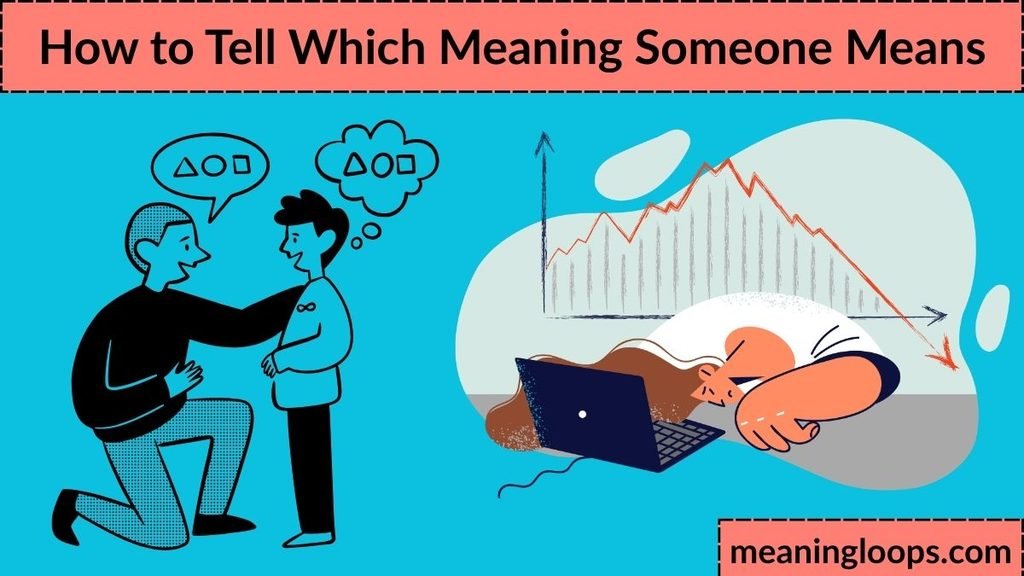
This is the part most guides skip, and it’s honestly the most useful section here. Since IGU meaning in text isn’t locked to a single definition, you need a quick way to decode it in real time. Here’s how.
Look at what was said right before it. IGU almost never stands alone in a way that makes sense without context. If the previous message described a problem, IGU likely means “I give up.” If it described a task or a need, it likely means “I got you.”
Check the emojis and punctuation. A 😤 or 😩 next to IGU signals frustration. A ❤️ or 🙏 signals support or empathy. No emoji at all, paired with a casual tone, usually defaults to “I got you.”
Consider your relationship with the sender. Close friends and siblings tend to use IGU more loosely and sarcastically. Coworkers or newer contacts almost always mean the supportive version, since it’s the safer, more universally understood option.
Notice the length of the reply. A one-word “IGU” with nothing else often reads as casual agreement. A longer message with IGU tucked into it usually carries more emotional weight.
| Clue | Likely Meaning |
|---|---|
| Preceded by a request or task | I Got You |
| Preceded by a complaint or struggle | I Give Up |
| Followed by comforting language | I Get You |
| Paired with 😩 😤 🙄 | I Give Up |
| Paired with ❤️ 🙌 👍 | I Got You |
Where IGU Came From
Like most modern internet slang, IGU didn’t appear overnight with an official announcement. It grew the same way abbreviations like BRB, IDK, and NGL did — through everyday casual communication, where speed matters more than spelling things out.
Texting culture has always rewarded brevity. When you’re typing on a phone mid-conversation, three letters move faster than a full sentence. Gaming communities and group chats helped push IGU in texting into wider use, since fast-paced conversations benefit from quick, low-effort replies that still carry meaning.
Over time, the abbreviation picked up multiple interpretations because people kept reusing it in slightly different emotional contexts. That’s fairly normal for texting abbreviations — think about how “sure” can mean genuine agreement or passive-aggressive annoyance depending on how it’s delivered. IGU works the same way.
IGU in Different Places (Texting vs. Social Media vs. Group Chats)
The IGU abbreviation doesn’t change meaning much across platforms, but it shows up with slightly different energy depending on where you see it.
In regular texting (iMessage/SMS): IGU tends to lean toward the “I got you” meaning, especially in one-on-one conversations between friends, family, or partners. It reads as sincere and direct.
On Instagram DMs and TikTok comments: IGU shows up more casually, often layered with humor. IGU meaning on social media conversations frequently blends into the “I give up” category, especially in comment sections reacting to something relatable or chaotic.
On Snapchat and WhatsApp: Similar pattern to regular texting — IGU functions as quick confirmation or support, since these platforms tend to mirror close, personal conversations.
In group chats and Discord servers: This is where IGU gets used the most loosely. IGU in chat with multiple people often carries a joking tone, since group dynamics naturally lean toward humor and sarcasm.
Across all of these, the core IGU usage stays consistent: it’s short, informal, and meant to keep the conversation moving without slowing things down for a full explanation.
Real Example Conversations
Seeing IGU examples in full context makes the meaning click faster than any definition can. Here are several realistic exchanges covering different tones.
Supportive tone:
“Hey, can you pick up the kids today? I’m stuck at work.” “IGU, I’ll grab them at 3.”
Sarcastic/joking tone:
“I’ve tried this recipe four times and it keeps burning.” “IGU at this point, just order pizza 😂”
Genuine frustration:
“I’ve been job hunting for three months with nothing.” “IGU, this market is brutal right now. Sending you good vibes.”
Empathetic tone:
“I really miss my grandma today.” “IGU. That kind of loss doesn’t really go away, it just gets easier to carry.”
Quick agreement:
“Meet at 7 instead of 8?” “IGU 👍”
Group chat humor:
“Who’s bringing snacks Saturday?” “IGU, I got chips and drinks covered.”
Notice how the same three letters shift meaning almost entirely based on what surrounds them. That’s the defining trait of this particular piece of modern texting slang — it leans entirely on context to do the heavy lifting.
When NOT to Use IGU
As casual and flexible as IGU is, it’s not built for every situation. Here’s where it falls flat or comes across the wrong way.
- Formal emails or professional documents — IGU reads as too casual and can seem unprofessional in writing meant to be taken seriously.
- Messages to your boss or clients — unless your workplace culture is already very relaxed, spell out “I’ve got it handled” instead.
- Texting someone unfamiliar with slang — older relatives, new contacts, or people outside your usual online conversations might not recognize the abbreviation at all, leading to confusion instead of clarity.
- Serious or sensitive conversations — if someone is sharing something heavy, a full sentence often communicates care more clearly than an abbreviation, even a well-meaning one.
A good rule of thumb: if you’d feel comfortable texting “lol” or “ngl” in that same conversation, IGU probably fits fine too.
IGU Outside of Texting: Insulated Glass Unit
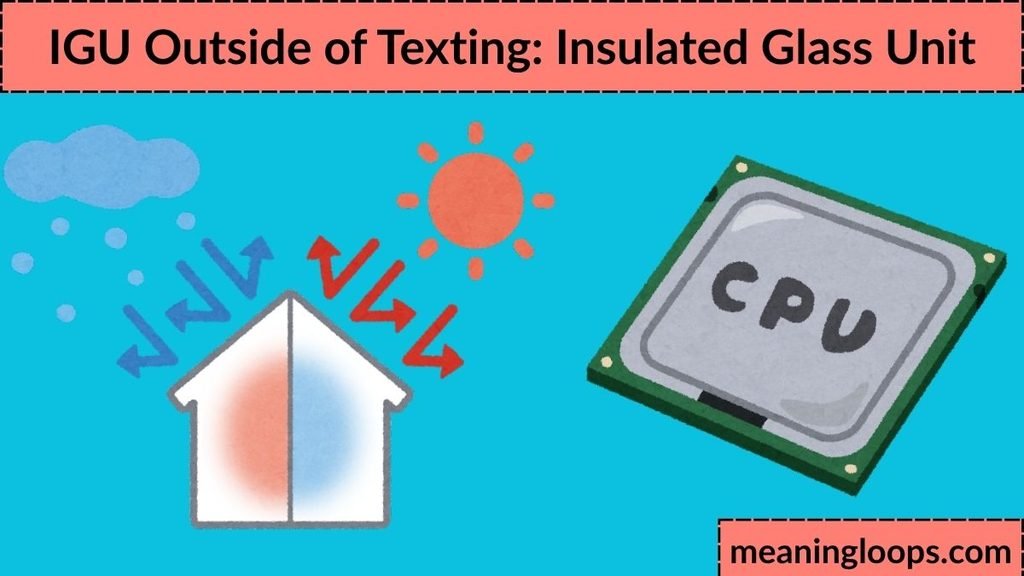
Here’s a meaning that has nothing to do with slang at all, but shows up often enough in searches that it’s worth covering properly.
In construction and engineering, IGU stands for “Insulated Glass Unit” — a type of window made from two or more panes of glass sealed together with a spacer, creating an insulating air or gas-filled gap between them. This design reduces heat transfer, improves energy efficiency, and helps buildings stay warmer in winter and cooler in summer.
You’ll see this version of IGU referenced in:
- Architectural blueprints and building specs
- Window manufacturing and replacement quotes
- Energy efficiency certifications for homes and commercial buildings
It’s a completely separate use of the acronym from the texting meaning, and mixing the two up in conversation would be pretty obvious pretty fast — nobody’s window contractor is going to text “IGU” and mean “I got you.” Context makes the difference immediately clear here, same as it does with the slang version.
Similar Texting Abbreviations to Know
Since you’re already brushing up on IGU slang, here are a few related abbreviations worth knowing. They tend to show up in the same kinds of casual conversations.
| Abbreviation | Meaning |
|---|---|
| NP | No problem |
| FR | For real |
| BET | Okay, agreed, sounds good |
| NGL | Not gonna lie |
| IYKYK | If you know, you know |
| TYSM | Thank you so much |
| IDGAF | I don’t care (blunt version) |
Learning a handful of these makes it much easier to keep up with informal English slang across texting and social platforms, since a lot of them follow the same “shrink the sentence, keep the meaning” logic that created IGU in the first place.
How to Reply When Someone Sends You IGU
Knowing how to respond to IGU depends entirely on which version someone’s using — which is why the earlier context clues matter so much.
If it’s the supportive “I Got You” version: Simply confirm or thank them. A quick “appreciate you” or “thanks, see you at 7” keeps the exchange natural and doesn’t overcomplicate a message that was meant to be easy.
If it’s the “I Give Up” version: Read the tone first. they’re joking, play along or lightly tease them back. they sound genuinely worn down, offer help or a bit of encouragement instead of brushing past it.
If it’s the “I Get You” empathetic version: Keep the conversation open. A simple “thanks, that means a lot” or continuing to share how you’re feeling usually fits best here, since this version of IGU is meant to validate, not end the conversation.
In all three cases, the golden rule stays the same: match their energy. IGU is casual by design, so an overly formal reply can feel mismatched, while a reply that’s too flippant can feel dismissive if they were actually venting.
Frequently Asked Questions
What does IGU mean in a relationship or dating text?
On dating apps and in relationship texting, IGU almost always leans toward the supportive meaning — “I got you” — signaling reassurance, reliability, or emotional backup during a conversation.
Is IGU rude to say?
Not inherently. It only comes across poorly if used in a serious moment where a fuller response would show more care, or in formal settings where slang feels out of place.
Does IGU mean the same thing on Snapchat as it does in iMessage?
Yes, largely. The IGU meaning on social media platforms stays consistent with regular texting — the platform doesn’t change the definition, just the general tone of the surrounding conversation.
What’s the difference between IGU and IGY?
IGY isn’t a widely recognized standard abbreviation the way IGU is, so if you see it, it’s most likely a typo or a personal shorthand specific to that sender. IGU has clear, established meanings across casual digital communication; IGY doesn’t carry the same recognition.
Is IGU only used by younger users?
It’s most common among younger users and in gaming or group-chat spaces, but it’s spread widely enough that it shows up across most age groups active in texting and social messaging today.
Bottom Line
At its core, IGU meaning in text comes down to three short possibilities — “I got you,” “I give up,” or “I get you” — and almost every confusing moment gets solved just by reading the message around it. Check the sentence before it, glance at any emojis, and think about who’s sending it.
Once you’ve got that pattern down, decoding IGU meaning in text messages stops being a guessing game and becomes second nature, right alongside the dozens of other text message abbreviations that make up modern texting culture.

David Miller is the lead content writer at Meaning Loops, where he creates accurate and easy-to-understand content on word meanings, synonyms, antonyms, idioms, phrases, acronyms, abbreviations, and vocabulary. His goal is to help readers improve their English with reliable, well-researched, and SEO-friendly language resources.