Picture this: a coworker sends you a paragraph explaining how they fixed a problem you’ve been stuck on for a week. You type back Is It Correct to say Ok thank you” hit send, and immediately wonder if that sounded flat. Or maybe you’re on the other end — you got a reply like that and felt a small sting, like the effort you put in wasn’t quite matched.
That tiny moment of doubt is the whole reason this topic keeps coming up. “Ok, thank you” is one of the most common phrases in the English language, and also one of the most misread. This guide walks through the grammar, the psychology, and the practical rules so you never have to second-guess it again.
Quick Answer: Yes, It’s Correct — But Context Decides If It’s a Good Idea
If you only have ten seconds, here’s what you need to know.
Grammar-wise: Is It Correct to say Ok thank you is completely valid English. There’s no rule it breaks.
Tone-wise: it’s a chameleon. The same three words can sound perfectly polite in one message and slightly cold in another, depending on the platform, the relationship, and what came before it.
So the real question you should be asking isn’t “is this allowed?” It’s “does this fit the moment?” Keep reading, and you’ll know exactly how to answer that every time.
The Grammar Breakdown: Is “Ok, Thank You” Punctuated Correctly?
Let’s settle the technical side first, since this is where most of the confusion actually starts.
Comma or No Comma?
You’ll see this phrase written two ways: Is It Correct to say Ok thank you Only one of them follows standard grammar rules.
“Ok” acts as an interjection at the start of the sentence, functioning the same way “Well,” or “Right,” would. Interjections are traditionally followed by a comma, which makes “Ok, thank you” the technically correct version.
The comma-free version isn’t wrong so much as informal. It’s become the default in texting, where people type fast and punctuation often gets skipped entirely. Save the comma for emails and professional writing; drop it freely in texts.
Ok, OK, or Okay — Which One Should You Actually Use?
English gives you three spelling options, and different style guides pick different favorites.
| Spelling | Where It Fits Best | Who Prefers It |
|---|---|---|
| OK | News writing, formal documents | AP Style |
| Okay | Books, essays, general prose | Chicago Manual of Style |
| Ok | Texting, casual chat, social media | No official guide, but dominant online |
For workplace emails, “OK” or “Okay” both look more polished than lowercase “Ok.” It’s a minor detail, but professional writing tends to reward attention to minor details.
One Sentence, Not Two
Structurally, “Ok, thank you” is a single sentence built from an interjection plus an independent clause. Is It Correct to say Ok thank you” is really a compressed version of “I thank you,” so the comma links two connected thoughts rather than separating two full sentences. That tight construction is part of why the phrase can feel clipped — you’re compressing an acknowledgment and a thank-you into one quick unit, with no room left to expand.
What “Ok, Thank You” Actually Means in Everyday English
Grammar confirms the phrase works. It doesn’t explain what people hear when you use it — and that changes depending on the situation.
Acknowledgment
Most often, “Ok, thank you” simply means “message received.” Your dentist’s office texts to confirm your appointment time, and you reply Is It Correct to say Ok thank you You’re not expressing deep gratitude — you’re confirming you got the information.
Conversational Closure
This phrase frequently signals that an exchange has reached its natural end. A support rep solves your problem, you say Is It Correct to say Ok thank you” and the conversation wraps up cleanly for both sides.
Mild, Functional Gratitude
Compared to “Thank you so much!” or “I really appreciate this,” a plain “Ok, thank you” reads as polite but restrained. Think of it like the difference between a nod and a smile — both are friendly, but one carries more warmth than the other.
Is “Ok, Thank You” Grammatically Correct?
To answer this directly and clearly: yes, without any caveats. It follows standard English sentence structure, uses a common and accepted interjection, and appears constantly in both spoken and written English across every register — casual, professional, and everything in between.
What trips people up isn’t the grammar. It’s the assumption that “correct” and “appropriate” mean the same thing. They don’t. A sentence can be flawless on paper and still land wrong in a specific moment. That gap between correctness and fit is what the rest of this guide actually covers.
When “Ok, Thank You” Sounds Polite
There’s a long list of situations where this phrase is not just acceptable but genuinely the best choice — no upgrade required.
It works well when you are:
- Confirming a plan or instruction. “Ok, thank you, I’ll have it ready by noon.” Clean and clear.
- Closing a fully resolved conversation. Nothing more needs to be said, so nothing more should be.
- Chatting with people you know well. Friends, close coworkers, and regular contacts rarely read brevity as coldness — they read it as normal shorthand.
- Replying inside a fast conversation thread. Group chats and quick back-and-forth exchanges actually reward short replies.
- Handling logistics. Scheduling, confirmations, and quick factual exchanges don’t need emotional weight attached.
In every one of these cases, short equals efficient, not short equals rude.
When “Ok, Thank You” Can Sound Cold or Dismissive
Now the flip side, because there are specific traps worth knowing about.
It may sound cold when:
- The message you’re replying to was long or thoughtful. If someone writes several sentences explaining something and you answer with three words, it can feel like their effort went unnoticed.
- Someone just did you a real favor. A friend spends their Saturday helping you paint your apartment, and “Ok, thank you” badly undersells how grateful you actually are.
- There’s no punctuation softening it at all. “Ok thank you” with nothing added — no comma, no exclamation point — reads flatter than intended, especially in text where tone cues are already thin.
- It’s the entire reply, full stop. No question, no comment, no continuation. This can feel like a door closing mid-conversation.
- You’re responding to difficult or sensitive news. Hearing about a canceled project or a tough personal update, then getting “Ok, thank you” back, can feel oddly detached even when that’s not the intent.
Written English strips away tone of voice, so brevity without context is often misread as coldness — even when nothing negative was meant by it.
That risk is really the whole story here: the same efficiency that makes this phrase useful is exactly what makes it easy to misjudge.
Tone in Written Communication vs Spoken Conversation
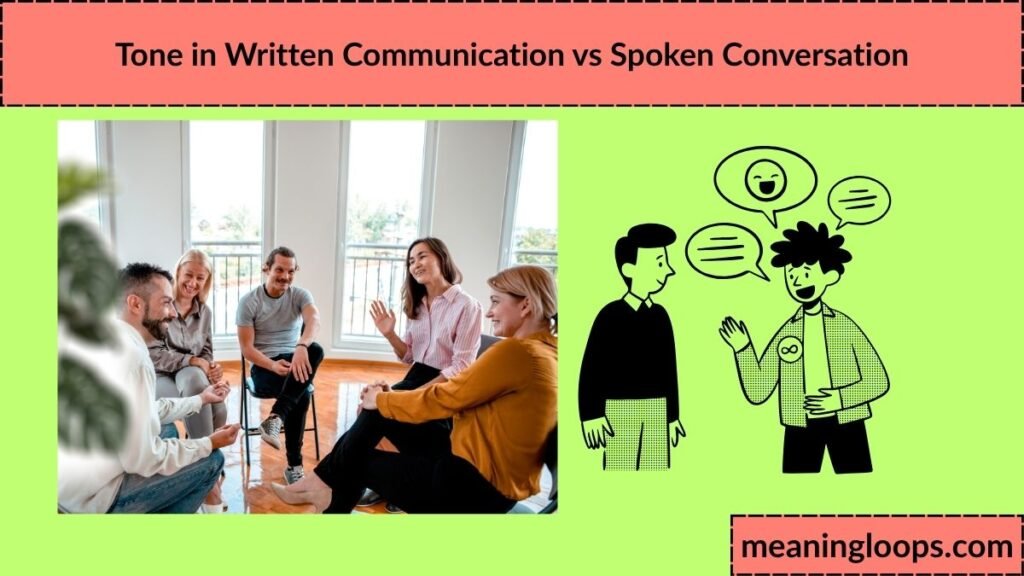
The gap between how this phrase sounds out loud and how it reads on a screen is enormous, and it’s worth understanding why.
Spoken English Carries Built-In Tone Cues
When you say Is It Correct to say Ok thank you” out loud, pitch, pace, and pauses do most of the communicating. A warm upward inflection at the end sounds genuinely appreciative. A flat, rushed delivery — especially without a pause between “Ok” and “thank you” — can sound impatient, even if that’s not how you feel.
Say it out loud three different ways: as if you’re relieved, as if you’re bored, and as if you’re mildly annoyed. Same three words, three completely different messages. That’s the power of spoken tone, and it’s exactly what written text is missing.
Written English Puts All the Weight on Word Choice and Punctuation
Text has no pitch or pace to lean on, so punctuation has to do that job instead. This is exactly why “Ok, thank you.” can read as curt while “Ok, thank you!” reads as warm — a single exclamation point is standing in for the tone your voice would otherwise supply.
Linguist Deborah Tannen has written extensively about how misunderstandings in written communication often stem from readers supplying a tone the writer never intended. Your reader might imagine a flat, irritated voice behind your message, even if you typed it while smiling.
Cultural and Contextual Differences in Interpretation
Communication researchers, most notably anthropologist Edward T. Hall, split cultures into “high-context” and “low-context” categories. That framework applies directly here.
Key differences:
- Low-context, direct-communication cultures — Germany, the Netherlands, and much of Scandinavia are frequently cited examples — tend to prize efficiency in speech. “Ok, thank you” typically reads as completely normal, even efficient, in these settings.
- High-context cultures — Japan and many parts of Southeast Asia are common examples — often place greater value on softening language and relationship-focused phrasing. A blunt “Ok, thank you” can come across as slightly abrupt by comparison.
- This is a broad pattern, not a guarantee. Individual communication style varies enormously within any culture, often more than it varies between cultures. Watch how the specific person you’re talking to communicates, rather than assuming based on background.
Anyone working across cultures regularly will get more value from observing a colleague’s own phrasing habits than from any general rule.
Better Alternatives to “Ok, Thank You” (When Tone Matters)
Sometimes you read the situation and decide the plain version isn’t quite enough. These alternatives add warmth without adding much length.
More natural alternatives:
- “Got it, thank you so much!” — Confirms receipt while sounding genuinely appreciative.
- “Thanks, that helps.” — Signals the information was actually useful, not just received.
- “Perfect, thank you for the update.” — Works well for scheduling changes and status updates.
- “Alright, I appreciate it.” — Casual but noticeably warmer than the plain version.
- “Understood, thank you.” — A slightly more formal option, useful for workplace confirmations.
- “Got it, thanks — that’s really helpful.” — Best for moments when someone solved an actual problem for you.
When to use them: reach for one of these any time the original message carried real effort or detail, any time you’re writing an email rather than a text, or any time you’re genuinely unsure how the short version will land. A few extra words cost you almost nothing and buy a noticeable amount of goodwill.
When It’s Perfectly Fine to Use “Ok, Thank You”
To balance out the warnings above, here’s a clear list of situations where you can use the plain version with zero hesitation.
It fits best when:
- The message you received was itself short and transactional.
- You’re texting a friend or close colleague in a casual thread.
- You’re confirming logistics — times, dates, locations, simple facts.
- The conversation has clearly reached its natural end.
- You’re replying quickly in a group chat where brevity is the norm.
If your situation matches any of these, don’t overthink it. The plain phrase is doing exactly what it’s supposed to do.
Common Misunderstandings People Have About This Phrase
A surprising amount of the anxiety around this phrase comes down to a handful of myths that don’t hold up once you examine them.
Misunderstanding 1: Short equals rude. Length on its own has very little to do with rudeness. Plenty of short replies are perfectly polite, and plenty of long ones manage to sound passive-aggressive. What matters is whether the length matches the moment.
Misunderstanding 2: “Ok” weakens gratitude. Some people assume pairing “Ok” with “thank you” somehow dilutes the thanks, as though “Ok” drags the sentence down. In practice, Is It Correct to say Ok thank you” is doing acknowledgment work, not undercutting the gratitude that follows it.
Misunderstanding 3: Every message needs warmth. Not every exchange calls for emotional warmth. Scheduling confirmations, quick factual replies, and routine logistics generally don’t need it, and adding warmth everywhere can start to feel performative rather than sincere.
Email and Workplace Etiquette With “Ok, Thank You”
Workplace communication runs on its own set of unwritten expectations, and this phrase behaves differently depending on who’s reading it.
Safe usage examples:
- Confirming a quick internal message: “Ok, thank you — I’ll get that updated today.”
- Acknowledging a routine FYI from a colleague you talk to often.
- Confirming a meeting time with a teammate you know well.
Risky usage:
- Replying to a detailed client email with only “Ok, thank you.” and nothing else.
- Responding to a manager’s detailed feedback with just this phrase, especially after they took real time to explain something.
- Using it as your entire response to an HR message, where slightly more formality is generally expected.
Simple workplace rule: match the effort level of the message you received. A one-line question earns a one-line answer. A detailed, thoughtful message earns at least one added sentence, even a short one.
Text Messaging Etiquette and Modern Communication Trends
Texting norms have shifted enormously over the past two decades, and those shifts directly affect how this phrase gets read. Research on mobile messaging habits, including work published by the Pew Research Center, has consistently found that shorter, faster replies have become standard practice rather than an exception — particularly among younger users who grew up texting.
That shift means “Ok, thank you” in a text thread rarely raises any red flags the way it might in a formal email. Group chats, casual one-on-one texting, and workplace messaging apps all run on an unspoken agreement that brevity is normal, not dismissive.
Even so, small additions still go a long way. Tacking on an emoji, an exclamation point, or a quick follow-up thought — “Ok, thank you! I’ll take a look tonight 👍” — reads as noticeably more engaged than the bare phrase alone, and it costs almost nothing to add.
Final Verdict — Should You Say “Ok, Thank You”?
Yes, grammatically, without hesitation. It’s a clean, valid phrase that fits comfortably into casual and semi-formal English.
Whether it’s the right call in any given moment depends entirely on reading the room. Use it freely for quick confirmations, casual exchanges, and situations where brevity is expected and welcomed. Add a bit more warmth when someone has put in real effort, shared something emotional, or sent you a message that clearly deserved more than three words back.
The phrase was never really the issue. The mismatch between a short reply and a message that deserved more attention — that’s what actually causes friction. Once you’re tuned in to that gap, this phrase turns into a reliable, everyday tool instead of something you have to second-guess.
FAQs
Is it correct to say “Ok, Thank You”?
Yes. It’s a grammatically valid sentence pairing an interjection with a shortened independent clause, and it’s used constantly across both spoken and written English.
Is “Ok, Thank You” formal or informal?
It sits on the casual-to-semi-formal end of the spectrum. It’s fine for everyday workplace messages and casual writing, but highly formal contexts — client proposals, official letters — often call for a fuller phrase like “Thank you for the update.”
Can “Ok, Thank You” sound rude?
It can, in the right (or wrong) circumstances. It’s most likely to sound cold when it’s the only reply to a long or emotionally significant message, or when it’s delivered with no punctuation and no follow-up.
When should I use “Ok, Thank You”?
Use it for quick confirmations, logistics, casual chats with people you know well, and conversations that have naturally wrapped up. It’s a strong default for low-stakes, transactional replies.
What are better alternatives?
“Got it, thank you so much!”, “Thanks, that helps,” “Perfect, thank you for the update,” and “Understood, thank you” all add warmth while staying brief. Use them when the moment calls for more than the plain version offers.
Conclusion
“Ok, thank you” gets more criticism than it deserves. It’s not broken English, and it’s not automatically rude — it’s a flexible phrase that shines in some situations and falls slightly short in others. The grammar was settled a long time ago. The actual skill worth building is noticing what a moment calls for and adjusting your reply to match it.
Next time you’re about to send it, pause for a second and ask whether it matches the energy of what you just received. If it does, send it exactly as written. If it doesn’t, add a few more words. That one small habit is the difference between a fine reply and a genuinely good one.
Read
Sans Meaning Explained: Definition and Real-Life Examples of “Sans” in English
Hasn’t vs Haven’t: The Clear, Friendly Guide You Can Actually Use
It Worth It or It Is Worth It? The Correct Way to Use “Worth” in English

David Miller is the lead content writer at Meaning Loops, where he creates accurate and easy-to-understand content on word meanings, synonyms, antonyms, idioms, phrases, acronyms, abbreviations, and vocabulary. His goal is to help readers improve their English with reliable, well-researched, and SEO-friendly language resources.