If someone just texted you “twin” and you don’t have a sibling, you’re not losing your mind. Twin meaning slang has nothing to do with biology. It’s one of the most common friendship terms floating around texting slang and social media slang right now, and if you’ve seen it in a comment section, a DM, or a group chat, you’re witnessing one of the fastest-spreading pieces of internet culture in recent years.
This guide breaks down exactly what does twin mean in text, where the term came from, how it shows up differently across TikTok, Instagram, Snapchat, and WhatsApp, and how to respond the next time someone calls you their twin. By the end, you’ll understand the twin meaning in slang well enough to use it yourself without second-guessing your tone.
What Does “Twin” Mean in Slang?
In online slang, twin is a friendly nickname for someone who feels remarkably similar to you — in personality, humor, taste, or mindset. It’s not about looking alike or being related. The slang meaning of twin points to a feeling: “we’re basically the same person.”
“Twin” at a Glance (Definition Box)
| Aspect | Meaning |
|---|---|
| Literal meaning | A sibling born from the same pregnancy |
| Slang meaning | A close friend who shares your personality, humor, or vibe |
| Tone | Warm, playful, platonic (usually) |
| Common in | Texting, TikTok, Instagram, Snapchat comments |
| Popular with | Gen Z and younger millennials, though usage is spreading across age groups |
| Typical use | Greeting, compliment, or reaction to shared thoughts |
Key takeaway: if a close friend or best friend texts you “twin,” they’re telling you that you two are on the same wavelength — not announcing a family reunion.
Where “Twin” Slang Actually Comes From
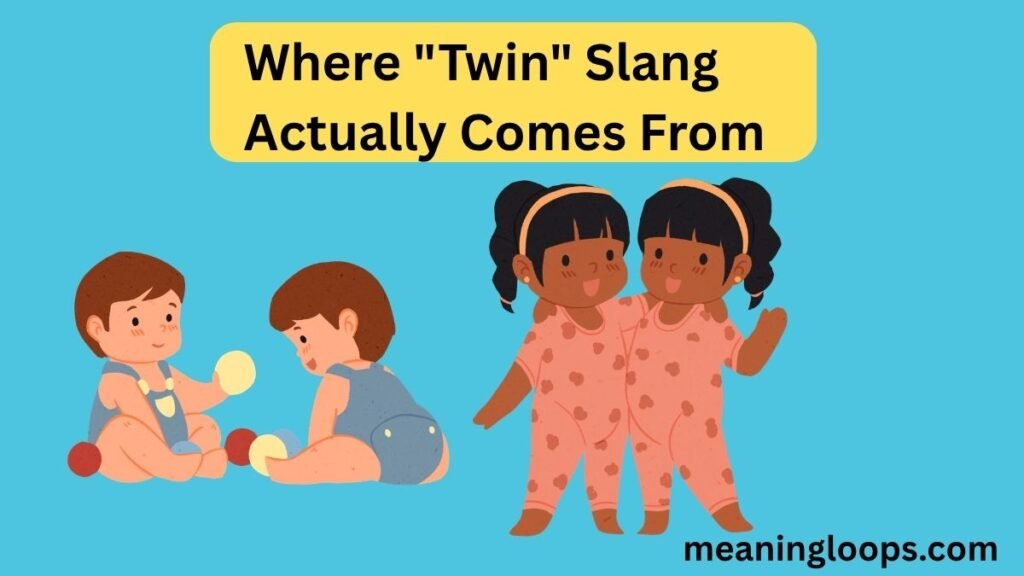
Slang rarely appears out of nowhere, and twin is no exception. Understanding its background helps explain why the word carries so much warmth, and why it caught on so fast.
The Literal Meaning vs. the Slang Meaning
Historically, “twin” referred strictly to one of two children born at the same birth. That’s still the dictionary definition, and it hasn’t gone anywhere — but language evolves through a process linguists call semantic broadening, where a word’s meaning stretches beyond its original, narrow use. “Twin” followed a familiar path: from a literal family term to a metaphor for close connection and similarity, much like how “sis” and “bro” moved from referring to actual siblings to becoming general terms of address for close friends.
Roots in AAVE and Chicago/Atlanta Hip-Hop Culture
The friendly nickname version of “twin” has strong roots in African American Vernacular English (AAVE), where it has long functioned as a term of endearment between people who feel like extensions of one another — closer than “friend,” but without romantic implication. Cultural commentary online traces a more recent wave of the term to Chicago’s West Side in the mid-2010s, where it was reportedly popularized as an expression of solidarity and positivity between friends before spreading through music culture. From there, it moved through hip-hop scenes in cities like Atlanta, carried by artists and their surrounding communities, and picked up steam as a marker of loyalty — the idea that a true “twin” is someone you’d treat exactly as you’d treat yourself.
Note on sourcing: Specific claims about who coined the term or the exact year it emerged are difficult to verify with primary sources, since slang spreads informally through communities before being documented. Treat detailed origin stories you see online — including in this article — as commonly repeated cultural narratives rather than confirmed historical fact.
How TikTok and Instagram Took It Mainstream
Once a term like this exists in music culture and everyday speech, TikTok creators and Instagram creators are usually the ones who push it into mainstream digital communication. Short-form video comments and captions reward compact, emotionally expressive language, and “twin” fits perfectly: it’s one syllable, instantly recognizable, and communicates a whole relationship dynamic without extra explanation. As more creators used it in captions and replies, it became normalized across social media communication, eventually landing in everyday text messages between friends who’d never even seen the videos that popularized it.
What Does “Twin” Mean in a Text Message?
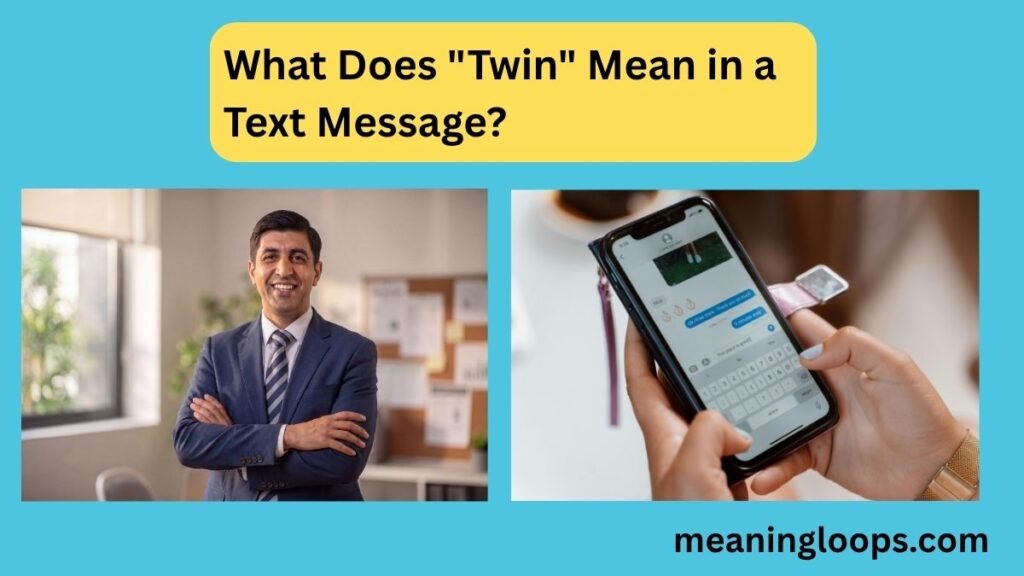
Context changes everything with slang. The twin meaning in chat shifts slightly depending on how and when it’s used, but it almost always signals closeness and relatable energy.
As a Casual Greeting
The simplest use of the word is as a stand-in for “hey” or “what’s up.” Texting “twin, you up?” carries the same function as texting a friend’s name, but with extra warmth built in.
Example:
“Twin, are we still on for tonight?”
This isn’t a deep philosophical statement — it’s a casual greeting dressed up in a playful nickname.
As a Reaction When You Think Alike
One of the most common uses is reactive: someone says or does something, and you respond with “twin” because you were about to say or do the exact same thing.
Example:
Friend: “I was literally about to order the same thing.” You: “Twin!! Get out of my head.”
This use highlights shared thoughts, same opinions, or same reactions — the instant recognition that you and another person are operating on the exact same wavelength.
As a Compliment or Term of Endearment
Calling someone “twin” can also function purely as a compliment. It tells the other person: I see myself in you, and that’s a good thing. This is where the term overlaps with other friendship slang terms like “bestie” or “my person,” but with a slightly stronger implied bond.
In a Romantic or Close-Relationship Context
While the term is overwhelmingly platonic affection rather than romance, it does occasionally show up between romantic partners to describe an unusually strong emotional match — someone who “gets” you on every level. In that context, “twin” starts to resemble words like soulmate or “my person,” though it’s used far less often romantically than platonically. If you’re unsure which meaning applies, the surrounding conversation and relationship history will almost always make it obvious.
“Twin” Across Social Media Platforms
The twin meaning in social media stays consistent at its core, but each platform has its own flavor of usage.
TikTok
On TikTok, “twin” shows up constantly in comment sections reacting to relatable content — videos about specific personality quirks, inside jokes, or “this is so me” moments. Commenters tag friends with “twin” to say, this is literally us.
On Instagram, the word tends to appear in captions and comments under posts that highlight matching style, humor, or shared experiences — think coordinated outfits, similar vacation photos, or reposted memes tagged to a friend.
Snapchat
Snapchat usage leans more into direct messaging between close friends, often as a quick greeting or a reaction to a snap that feels uncannily similar to something the recipient would post themselves.
In WhatsApp group chats, “twin” often appears when two members repeatedly send the same message, reaction, or opinion at the same time — a lighthearted way of pointing out the coincidence.
Across all platforms, the underlying meaning doesn’t change: connection, similarity, and closeness. Only the delivery format — comment, caption, DM, or group message — shifts.
Common “Twin” Phrases, Decoded
Beyond the standalone word, several set phrases have developed their own specific shades of meaning.
“Don’t Go On Today, Twin”
This phrase is a casually supportive way of saying “take it easy today” or “don’t stress.” It’s typically sent when a friend seems overwhelmed, and pairing it with “twin” softens the concern into something warm rather than preachy.
“Good Morning, Twin”
A simple daily greeting exchanged between close friends, often as part of an ongoing routine. It signals familiarity and consistency in the friendship — the kind of message you send to someone you talk to nearly every day.
“Twin, Where You At?”
This is a check-in phrase, usually sent when someone hasn’t responded in a group chat or has gone quiet on social media. It’s a friendly nudge rather than an urgent one.
“That’s My Twin”
Used to introduce or describe a close friend to someone else, similar to saying “that’s my ride-or-die” or “that’s my person.” It signals a strong, established bond rather than a new or surface-level friendship.
“Twin” vs. Similar Slang Terms
It’s worth comparing twin to other friendly nickname options, since they’re often used interchangeably but carry subtly different weight.
| Term | Typical Tone | Relationship Type | Romantic or Platonic? |
|---|---|---|---|
| Twin | Warm, emphasizes similarity | Close friend, sometimes partner | Mostly platonic |
| Bestie | Affectionate, casual | Best friend | Platonic |
| Bro / Sis | Friendly, familiar | Friend, treated like family | Platonic |
| Homie | Casual, loyal | Close friend or crew member | Platonic |
| Soulmate / My Person | Deep, emotional | Romantic partner or extremely close friend | Can be either |
Twin vs. Bestie
“Bestie” emphasizes rank — this person is your best friend among many. “Twin” emphasizes resemblance — this person feels like an extension of you, regardless of how many other close friends you have.
Twin vs. Bro / Sis
“Bro” and “sis” frame the relationship in family terms without necessarily implying similarity. Two people can call each other “bro” despite having completely different personalities. “Twin” specifically implies matching vibes or matching personality.
Twin vs. Soulmate / “My Person”
“Soulmate” typically carries more romantic or fate-driven weight. “Twin” is lighter and more casual, even when it’s expressing something genuinely meaningful — which is part of why it works so well in quick texts and comments rather than heartfelt letters.
Common Misunderstandings About “Twin” Slang
Because the term is relatively new to some age groups, a few misconceptions come up often.
Thinking It Means Actual Siblings
The most common confusion, especially for people encountering the slang for the first time, is assuming the sender is talking about a literal sibling. Context almost always clears this up quickly — if you’re not related and someone calls you “twin,” they’re using texting slang, not making a factual claim about your family tree.
Assuming It’s Always Romantic
Because terms like “soulmate” carry romantic connotations, some people assume “twin” must too. In reality, the overwhelming majority of usage is platonic friendship language, exchanged between friends of any gender combination.
Assuming Only Gen Z Uses It
While the term is strongly associated with youth slang and modern slang trends, its AAVE roots mean it has circulated in certain communities for far longer than its recent viral spike suggests. Millennials and even some Gen X speakers who are close to younger family members or active on social media have picked it up too.
When to Use “Twin” — and When to Skip It
Like most casual language, timing and audience matter.
Good Contexts to Use It
- Texting a close friend who shares your sense of humor
- Reacting to a relatable post, meme, or comment
- Greeting someone you talk to daily
- Complimenting someone’s taste, outfit, or opinion that matches yours
Contexts Where It Can Land Wrong
- With strangers or new acquaintances — the term implies existing closeness, so using it too early can feel forced or confusing.
- In formal or professional settings — it’s firmly informal language, not appropriate for work emails or client messages.
- With people unfamiliar with the slang — an older relative or someone outside the relevant online communities may take it literally and assume you’re referring to an actual sibling.
Expert tip: if you’re unsure whether someone will understand the term, a quick clarifying follow-up like “haha, twin as in we think alike” avoids any confusion without killing the moment.
How to Respond When Someone Calls You “Twin”
There’s no wrong way to respond, but a few approaches keep the exchange natural and fun.
Play Along
Simply mirroring the energy — “twin!! 😂” — is often enough. You don’t need to overthink a reply to a lighthearted nickname.
Return the Compliment
Since being called “twin” is usually a compliment, reflecting it back (“no you’re MY twin”) reinforces the connection without much effort.
Ask What Prompted It
If you’re genuinely curious what sparked the comparison, asking “wait, why am I your twin right now?” often leads to a fun conversation and shows real interest rather than a throwaway reply.
Use It Back Naturally
Over time, many friendships adopt “twin” as a recurring nickname for each other, similar to how some friends settle into calling each other “dude” or “bestie” permanently.
Common Mistakes People Make With “Twin” Slang
- Overusing it until it loses meaning — like any nickname, constant repetition dilutes the warmth.
- Using it with someone who won’t get the reference, leading to genuine confusion rather than a shared joke.
- Misreading tone in text, especially sarcasm — “twin” said sarcastically after a disagreement means the opposite of closeness, and context clues (punctuation, emojis, prior messages) matter for catching that shift.
- Assuming it always signals a compliment when, in rare sarcastic contexts, it can point out how different two people’s opinions turned out to be (“yeah, we’re definitely not twins on this one”).
Frequently Asked Questions
What does twin mean in slang?
In slang, twin refers to a close friend who shares your personality, humor, opinions, or general vibe. It’s a term of closeness and similarity, not a reference to literal siblings.
Is calling someone twin a compliment?
Yes. Calling someone your twin is almost always meant as a compliment, signaling that you see them as being on the same wavelength as you.
Does twin mean best friend?
Not exactly, but the two overlap heavily. “Bestie” ranks someone as your top friend; “twin” describes how similar you feel to that person. Many people use both terms for the same close friendships.
Is twin slang romantic?
Usually not. Twin is predominantly platonic, though it occasionally appears in romantic contexts to describe an unusually strong emotional or personality match between partners.
Where did twin slang come from?
The term’s modern usage traces back to AAVE and cultural communities within hip-hop and music culture, later amplified by TikTok and Instagram creators who helped it spread into mainstream texting culture.
Is it okay to call someone twin if you’re not close with them?
It can come across as odd or premature. Because “twin” implies existing familiarity, it’s best used with people you already have a genuine connection with rather than as an opener with someone new.
Conclusion:
The twin meaning slang trend boils down to one simple idea: closeness expressed in the shortest, warmest way possible. Whether it shows up as a casual greeting, a reaction to shared interests, or a straightforward compliment, calling someone your “twin” is a quick way to say we’re alike, and I like that about us. Now that you understand the origin, the platform-specific nuances, and the etiquette around using it, you’ll never have to wonder what’s behind the message the next time someone calls you their twin.
Read more:
AMOS Meaning on Instagram: What Does AMOS Mean? (2026 Guide)
“To Small” or “Too Small”? Here’s the Correct Way to Say It
“More Smart” or “Smarter” — Here’s the Grammar Rule You Actually Need

Hi, I’m Andrew Wilson, the founder of Meaning Loops. I created this website to help people understand English words in a simple and easy way. Here, I share word meanings, synonyms, antonyms, idioms, phrases, grammar tips, and vocabulary guides. My goal is to provide clear, accurate, and useful content that helps students, writers, and English learners improve their language skills. Thank you for visiting Meaning Loops and being part of this journey.






1 thought on “Twin Meaning Slang: What Does “Twin” Mean in Text? (2026 Guide)”