You’ve probably typed it both ways at some point. Maybe you paused, stared at the word, and thought, “Wait, does ‘Wreckless vs Reckless’ have a W or not?” You’re not alone. This mix-up shows up in text messages, news headlines, and even legal documents that really should know better.
Let’s clear it up once and for all.
The Short Answer
Reckless is the correct word. Wreckless isn’t a standard English word, no matter how often it shows up in casual writing or social media captions.
Here’s the twist that makes this so confusing:Wreckless vs Reckless behavior often causes wrecks. Your brain wants to spell the word the way it thinks about the outcome. But English doesn’t work that way here, and the spelling has nothing to do with the word “wreck.”
Keep that distinction in mind, and you’ll never mix them up again.
What “Reckless” Means
Dictionary Definition
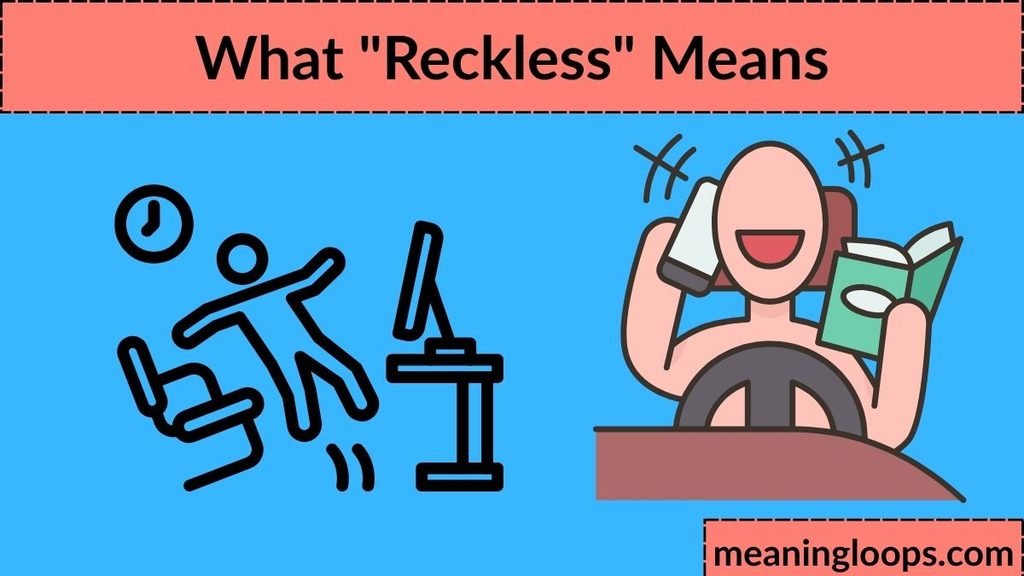
Merriam-Webster defines Wreckless vs Reckless as “marked by lack of proper caution: careless of consequences.” Oxford’s definition lands in the same place: acting “without thinking or caring about the consequences of an action.”
In plain terms, reckless describes someone acting without thinking. It’s a word about mindset, not outcome. A driver doesn’t need to crash to be reckless. They just need to disregard the risk.
That’s an important distinction. Reckless behavior isn’t defined by what happens. It’s defined by the disregard for consequences that led to the action in the first place.
Where the Word Comes From
Here’s where things get genuinely interesting, and it’s the part most articles skip entirely.
“Reckless” traces back to Old English reccan, meaning “to care” or “to heed.” Add the suffix -less, meaning “without,” and you get a word that literally translates to “without care” or “without heed.” By the time it passed through Middle English, the spelling had mostly settled into something close to the modern form.
So the “reck” in Wreckless vs Reckless has zero connection to the word “wreck.” They’re not related. They just happen to sound alike when you say them out loud, which is exactly why so many people assume a spelling connection that was never actually there.
Compare that to a word like “wreckage” or “shipwreck,” both of which trace back to a completely separate root tied to the idea of something being destroyed or cast ashore. Two different word families. One coincidental overlap in pronunciation. That overlap is the entire source of the confusion.
Why the Spelling Trips People Up
English is full of words that sound like they should be spelled a certain way but aren’t. Think of “expresso” instead of “espresso,” or “irregardless” instead of “regardless.” These are called eggcorns, a linguistic term for a word or phrase that gets misheard and respelled because the new version seems to make more logical sense.
“Wreckless” is a textbook eggcorn. It feels logical. Wreckless vs Reckless driving often ends in a wreck, so the brain wants to build a bridge between the two words. But phonetic similarity isn’t the same as etymological connection, and that gap is exactly where the mistake lives.
Why People Think “Wreckless” Is a Word

Let’s dig into the actual mechanism here, because “it’s just confusing” doesn’t really explain much.
Reckless driving frequently leads to a wreck. A reckless financial decision can “wreck” your savings. A reckless comment can wreck a relationship. The outcome of recklessness is so often destruction that the brain starts to associate the sound “reck” with the visual concept of a wreck.
This is called folk etymology: when speakers unconsciously reshape a word’s spelling or meaning based on a mistaken but intuitive-feeling connection. It happens constantly in English. “Bridegroom” used to be “bridegome,” but people reshaped it because “groom” made more sense to them. “Cockroach” comes from the Spanish cucaracha, reshaped into something that sounded more like familiar English words.
Autocorrect doesn’t help either. Most spell-checkers will flag “Wreckless vs Reckless,” but plenty of casual writing tools and social platforms let it slide, especially in comments and captions where nobody’s proofreading closely. Over time, that repeated exposure normalizes the error, even among people who’d otherwise catch it in a formal essay.
Is “Wreckless” Ever Correct?
Not in standard English. You won’t find it in Merriam-Webster, Oxford, or any major dictionary as a recognized term. If you write it in an email, a report, or an academic paper, it reads as a spelling mistake, not a stylistic choice.
There’s one narrow exception: intentional wordplay. A demolition derby company might call itself “Wreckless Racing” as a pun. A junkyard might use “wreckless” in a tagline. That’s a deliberate creative choice, and readers generally recognize it as a joke rather than a genuine spelling.
Outside of branding and wordplay, though, there’s no context where “wreckless” is the correct term. If you’re writing anything meant to be taken seriously, stick with reckless.
How to Use “Reckless” Correctly
As an Adjective
Wreckless vs Reckless almost always functions as an adjective, describing a person, action, or decision. Here’s how it typically shows up:
- Reckless driving
- Reckless spending
- Reckless decision
- Reckless behavior
- Reckless comment
- Reckless disregard
Notice the pattern? It modifies nouns tied to actions or choices, almost always ones involving some kind of risk.
Reckless vs. Careless vs. Rash vs. Negligent
Here’s something most articles gloss over: these words aren’t interchangeable. Each one carries a slightly different meaning, and in legal cases, that difference can matter a lot.
| Word | Core Meaning | Example |
|---|---|---|
| Reckless | Conscious disregard of a known risk | Racing through a red light at 80 mph |
| Careless | Failure to pay attention, without awareness of risk | Forgetting to check your mirror before merging |
| Rash | Acting on impulse, without thinking it through | Quitting your job on the spot after an argument |
| Negligent | Failing a legal duty of care, whether or not you knew the risk | A landlord ignoring a known fire hazard |
The key distinction: reckless implies you knew the risk and chose to act anyway. Careless implies you simply weren’t paying attention. Negligent is a legal term tied to a duty you failed to meet, regardless of your mental state.
This matters more than it might seem. In court, whether a driver’s actions get labeled “reckless” or merely “negligent” can change the charge entirely, sometimes shifting a case from a civil matter into a criminal one.
Common Phrases
A few set phrases use “reckless” so consistently that they’re worth knowing on their own:
- Reckless abandon — acting freely and without restraint, often used positively (“She danced with reckless abandon.”)
- Reckless disregard — a legal phrase describing a conscious indifference to consequences, frequently used in negligence and defamation cases
“Reckless” in Legal Contexts
Reckless Driving
Reckless driving is one of the most common real-world uses of this word, and it’s also one of the clearest examples of how much the definition matters.
In most US states, reckless driving is a distinct charge from careless driving or a standard traffic violation. It typically involves:
- Excessive speed well beyond posted limits
- Aggressive lane changes or weaving through traffic
- Street racing
- Driving under the influence combined with dangerous maneuvers
- Ignoring traffic signals in a way that endangers others
The key legal element is intent, or at least awareness. A reckless driving accident charge usually requires prosecutors to show the driver knew their actions were dangerous and did it anyway. That’s a higher bar than proving simple carelessness, which is why reckless driving often carries steeper penalties, including license suspension and, in serious cases, jail time.
“The difference between careless and reckless driving often comes down to state of mind. Careless driving is about inattention. Reckless driving is about willful disregard.” — a common framing used in traffic law explanations across multiple US state bar associations.
Workplace Recklessness
Workplace recklessness covers a different but related territory. Think of a supervisor who skips a required safety inspection to save time, or an employee who disables a safety guard on machinery because it slows down production.
Workplace safety regulators, including OSHA in the United States, distinguish between simple negligence and willful, reckless violations. The latter typically triggers steeper fines and can expose a company to lawsuits if an employee gets hurt as a result.
A short case example: in several documented workplace injury lawsuits, courts have specifically used the term “reckless disregard for employee safety” to describe situations where a company knew about a hazard, had the ability to fix it, and chose not to. That phrase alone often becomes the deciding factor in whether a jury awards punitive damages on top of standard compensation.
Quick Memory Tricks
Need a fast way to lock this in? Try one of these:
- No wreck in reckless. The word has zero connection to “wreck.” Picture the “w” simply not existing.
- Reck means “to care.” If you remember that reckless literally means “without care,” the spelling makes more sense on its own terms.
- Swap test. If you can replace the word with “careless” and the sentence still makes sense, you want reckless, not wreckless. “That was a careless decision” and “That was a reckless decision” both work. “Wreckless” never will.
Real Examples: Correct vs. Incorrect Usage
Seeing the mistake next to the fix tends to stick better than any rule. Here’s a side-by-side breakdown covering the places this error shows up most often, including headlines, captions, and everyday writing.
| Incorrect | Correct |
|---|---|
| He was arrested for wreckless driving. | He was arrested for reckless driving. |
| That was a wreckless financial decision. | That was a reckless financial decision. |
| Stop being so wreckless with your money. | Stop being so reckless with your money. |
| Local teen charged after wreckless behavior on the highway. | Local teen charged after reckless behavior on the highway. |
| Her wreckless comment on social media caused backlash. | Her reckless comment on social media caused backlash. |
| The company faced a lawsuit over wreckless workplace conditions. | The company faced a lawsuit over reckless workplace conditions. |
Notice something? Every single “wreckless” version reads slightly off once you know the rule. That’s the goal: train your eye to catch it automatically.
Why This Mistake Matters More Than You’d Think
You might think a single misspelled word doesn’t carry much weight. In casual texting, sure, nobody’s grading you. But in professional writing, academic writing, or any official documentation, small errors chip away at credibility fast.
Think about it from a reader’s perspective. If a resume, a legal brief, or a news article misspells a common word, readers start to wonder what else got overlooked. That’s not fair, exactly, but it’s how writing credibility works. Readers use surface-level signals, like spelling and sentence structure, to judge how much they can trust the substance underneath.
This is especially true in fields where precision matters. Legal cases, insurance company claims, and court filings involving car accidents or car crashes often hinge on precise language. Getting “reckless” wrong in a document meant to describe unsafe driving doesn’t just look sloppy. It can genuinely muddy the meaning of the claim being made.
FAQs
Is “wreckless” a typo or a real informal word?
It’s a typo, not an informal or regional variant. Unlike words that started informal and later gained acceptance, “wreckless” has no dictionary backing anywhere. It’s simply a spelling and context error rooted in phonetic confusion.
What’s the difference between reckless and negligent?
Reckless implies you knew about a risk and acted anyway. Negligent implies you failed a duty of care, whether or not you were aware of the danger at the time. Courts treat these as distinct legal standards, and the difference can affect both the charge and the penalty.
Why does “wreckless” sound more logical than “reckless”?
Because reckless actions frequently end in wrecks. Your brain builds a mental shortcut connecting the sound of the word to the outcome it often produces. That shortcut is a classic case of folk etymology, not an actual linguistic rule.
Is “reckless” always negative?
Almost always, yes, though “reckless abandon” is sometimes used in a lighthearted or even admiring way, describing someone who acts freely without holding back. Outside that specific phrase, reckless nearly always carries a negative connotation tied to risk-taking and disregard for consequences.
What’s a synonym for reckless that’s never confused with another spelling?
“Rash” and “impulsive” both work well and don’t carry the same risk of a phonetic spelling trap. “Careless” is another safe option, though remember it carries a slightly different meaning, closer to inattention than willful risk-taking.
Bottom Line
Reckless is the only correct spelling. Wreckless isn’t a real word outside of intentional wordplay, no matter how logical it might feel in the moment. The confusion comes down to phonetic similarity, not any real connection between the words “reck” and “wreck.”
Next time you’re writing about reckless driving, a reckless financial decision, or any kind of reckless behavior, remember the swap test: if “careless” fits, “reckless” is your word. Drop the W, trust the etymology, and your writing will hold up in any context, from a quick text to a courtroom document.
What Does CYB Mean in Text? Meaning, Uses & Examples (2026)
What Does OSNS Mean in Text? Meaning, Uses & Examples (2026)
What Does BRK Mean in Text? Meaning, Uses & Examples (2026)

David Miller is the lead content writer at Meaning Loops, where he creates accurate and easy-to-understand content on word meanings, synonyms, antonyms, idioms, phrases, acronyms, abbreviations, and vocabulary. His goal is to help readers improve their English with reliable, well-researched, and SEO-friendly language resources.




3 thoughts on “Wreckless vs Reckless: Meaning, Usage, and Common Mistakes”